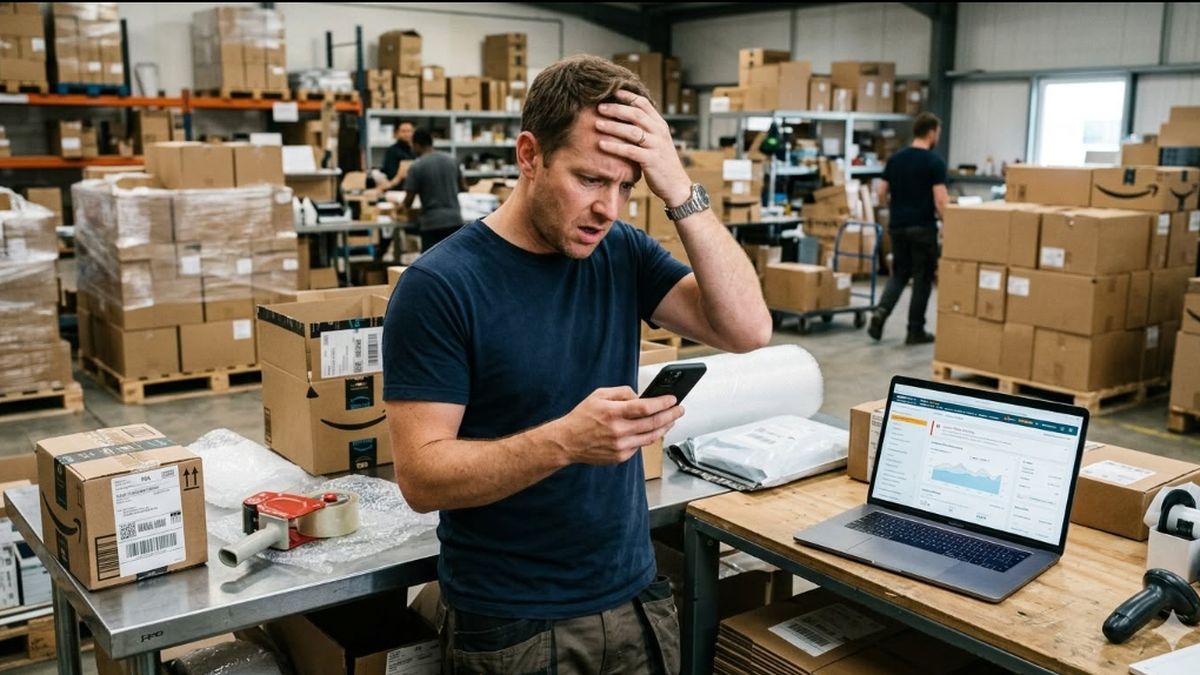
Many Amazon sellers are surprised when they suddenly receive a message from Amazon asking for:
✅ an EPR number
✅ a LUCID number
✅ a WEEE registration
✅ a battery registration
✅ proof of compliance
For many sellers, this comes completely out of nowhere. One day everything runs normally. The next day, Amazon warns that listings could be restricted if compliance information isn't provided.
This situation causes particular confusion for international sellers selling in Germany for the first time. Here's why Amazon asks for EPR numbers in Germany, what these requests mean, and what sellers should do next.
Why does Amazon suddenly request EPR information?
Amazon doesn't ask without reason. Germany has introduced increasingly stricter environmental and compliance laws, and marketplaces are under growing pressure to verify their sellers' compliance.
This means Amazon can now require: registration numbers, recycling IDs, and proof of participation in compliance systems. The goal is to ensure that products sold in Germany comply with German environmental regulations.
Official Amazon EPR information: sell.amazon.de
What does "EPR number" actually mean?
This is exactly where the confusion begins for many sellers. "EPR number" is often used as a general term. In reality, Amazon can require different registration numbers depending on the product category.
| Product type | Possible requirement |
|---|---|
| Packaged goods | LUCID registration |
| Electronics | WEEE registration |
| Products with batteries | Battery registration |
| Certain plastic products | DIVID / EWKF obligations |
This means not every seller needs the same registration.
The most common request: LUCID number
For many Amazon sellers, the first EPR request relates to the Packaging Act. Germany requires many companies that sell packaged goods to register in the official packaging register called LUCID.
If your products reach German consumers in packaging, you may need: a LUCID registration, participation in a dual system, and packaging reporting.
Official LUCID portal: lucid.verpackungsregister.org
Why many Amazon sellers panic
Many sellers think: "I only sell small quantities." "Amazon handles the shipping." "I'm not based in Germany." "This probably doesn't apply to me."
But German packaging law can still apply to foreign companies selling packaged products into Germany. That's why many international sellers suddenly receive Amazon compliance notifications.
The biggest misconception about Amazon FBA
One of the most common misconceptions is: "Amazon FBA handles packaging and shipping, so Amazon must handle EPR too." In many cases, this is wrong.
Even when sellers use Amazon FBA, packaging compliance obligations can still remain with the seller. This surprises many businesses, because Amazon physically ships the products — but legal responsibility can still lie with the company that places the goods on the German market.
Why Amazon has become stricter
In recent years, Germany has significantly tightened environmental compliance enforcement. At the same time, marketplaces like Amazon have been made more accountable for actively verifying seller data.
The result: Amazon sends more compliance warnings, more sellers receive EPR requests, and listing restrictions happen more often. Many sellers only learn about these obligations once Amazon contacts them directly.
What happens if sellers ignore Amazon EPR requests?
Some sellers ignore the notifications at first. This can become risky. Possible consequences:
✅ Listing restrictions
✅ Blocked product sales
✅ Compliance warnings
✅ Problems creating new listings
✅ Legal risks
✅ Fines
For many sellers, the biggest immediate risk isn't the government fine itself. The biggest problem is usually the loss of Amazon Germany revenue.
Why small sellers get notifications too
A common misconception is: "Only large companies need EPR registration." That's not always true.
Smaller sellers can also receive Amazon notifications if they sell packaged goods, sell electronics, sell products with batteries, or place products on the German market.
The difference between small and large sellers usually lies in: packaging volume, complexity of reporting, and operational risk — not necessarily in whether obligations exist at all.
What is a dual system?
Another point that confuses many sellers is the dual system. Many businesses believe that LUCID registration alone is enough. Often, it isn't.
A dual system is a licensed recycling provider in Germany. Companies typically pay fees based on: packaging materials, packaging weight, and annual packaging volume.
In many cases, sellers need both: a LUCID registration and participation in a dual system.
Which packaging materials count?
Many newcomers assume that only the product packaging counts. But German packaging law can also cover: shipping cartons, poly bags, bubble wrap, paper filling material, labels, tape, and plastic film.
In many cases, any packaging that reaches the end customer becomes relevant.
Why sellers get overwhelmed
Many sellers suddenly find themselves facing terms like: LUCID, EPR, VerpackG, WEEE, dual systems, recycling reports, battery registration, and Amazon deadlines.
This causes stress because the systems are unfamiliar, the terminology is confusing, and Amazon notifications often come with deadlines. For international businesses, language barriers make everything even harder.
Typical EPR-related costs
Many sellers are surprised that the actual packaging licence often isn't extremely expensive. Approximate examples:
| Seller type | Approximate annual packaging licence |
|---|---|
| Small seller | €50–€250 |
| Growing business | €300–€1,500 |
| Larger business | Several thousand euros |
The harder part is usually: understanding the obligations, calculating packaging correctly, avoiding mistakes, and staying compliant long-term.
Typical mistakes made by Amazon sellers
Many sellers cause problems because they:
✅ register with LUCID but ignore the dual system
✅ misunderstand which packaging materials count
✅ assume Amazon handles everything automatically
✅ ignore Amazon EPR notifications
✅ use incorrect company data
✅ fail to update compliance data
✅ only react once listings are already restricted
Most compliance problems come from misunderstandings — not deliberate violations.
What should sellers do after an Amazon EPR notification?
The best approach is usually:
1. Don't panic
2. Find out which EPR category Amazon is requesting
3. Check whether your own products fall under it
4. Verify whether registration is required
5. Complete registration if necessary
6. Provide Amazon with the requested information
7. Keep documentation and compliance data organized
Understanding the issue early is almost always easier than dealing with listing restrictions later.
Why many international sellers use compliance support
German compliance systems can be difficult even for local businesses. For international sellers, additional challenges come on top: language barriers, legal terminology, multiple systems, changing requirements, and Amazon deadlines.
That's why many businesses choose to use compliance services — to reduce confusion, avoid mistakes, save time, and lower operational risk.
Final thought
Amazon doesn't request EPR numbers at random. These requirements are directly tied to German environmental and compliance laws that increasingly affect online sellers.
The most important thing for sellers is to understand the system before problems escalate. Many businesses lose time and revenue because they ignore Amazon EPR notifications for too long.
Understanding the rules early is almost always cheaper — and far less stressful — than dealing with compliance problems after listings are already restricted.